filmbriefs
Director · Screenwriter · 1894–1964

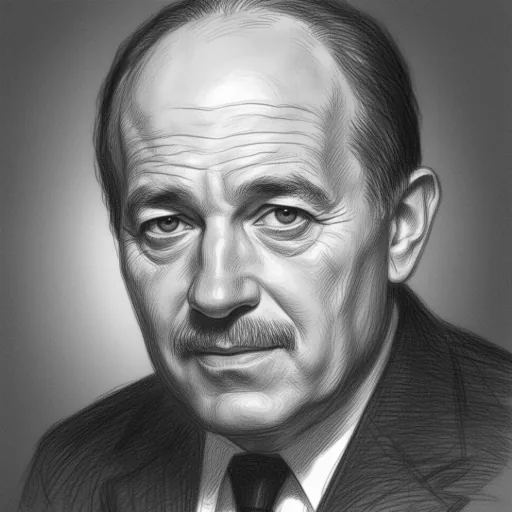
Ben Hecht

12
briefs
13:00
average
156 min
in total
On film.briefs12
13:00

Design for Living

Ernst Lubitsch, Ben Hecht · 1933

Ernst Lubitsch and Ben Hecht’s 1933 romantic comedy adapts Noël Coward’s play into a buoyant, Depression-era farce about a woman living with two men who love her. Starring Fredric March, Gary Cooper and Miriam Hopkins, it trades Coward’s epigrams for physical charm and situational humour, using swift editing, uncluttered cinematography and effortless performances to sustain its risqué premise without scandal. Though structurally loose and verbally thin, it remains a rare, coherent vision of non-monogamy as joyful improvisation — not transgression.
13:00

Foreign Correspondent

Alfred Hitchcock · 1940

Alfred Hitchcock’s 1940 thriller follows an American reporter uncovering a fascist conspiracy in pre-war Europe. Made under urgent political conditions and reshaped mid-production to mirror real-world events, it prioritises procedural tension and moral clarity over psychological depth or historical fidelity. Its strengths lie in set-piece choreography, studio-crafted suspense, and a prescient final sequence set in a besieged radio station.

13:00

Gilda

Charles Vidor · 1946

A 1946 Columbia Pictures drama starring Rita Hayworth and Glenn Ford, directed by Charles Vidor. Set in an artificial Buenos Aires, it traces the toxic, circular relationship between a gambler, his boss’s wife, and the boss himself — all rendered in high-contrast black-and-white, with precise performances and deliberate pacing. Though framed as noir, its concerns are psychological and performative, not procedural.

13:00

His Girl Friday

Howard Hawks · 1940

Howard Hawks’s 1940 comedy His Girl Friday recasts The Front Page as a battle of wits between ex-spouses Walter Burns and Hildy Johnson, a newspaper editor and reporter whose professional rivalry reignites as a romantic one. Shot at breakneck speed with overlapping dialogue, it privileges competence over sentiment and friction over harmony. Though formally dazzling and historically influential, it sidesteps the racial and ethical weight of its source material, treating injustice as backdrop rather than subject.

13:00

Notorious

Alfred Hitchcock · 1946

Alfred Hitchcock’s 1946 spy thriller follows an American agent who recruits the daughter of a Nazi sympathiser to infiltrate a German exile network in Rio. What unfolds is less a tale of espionage than a precise, emotionally restrained study of love under surveillance — where every glance is tactical, every touch conditional, and every silence charged with consequence. Shot on RKO soundstages with meticulous control, it relies on performance, composition, and pacing to build tension without action.

13:00

Ride the Pink Horse

Robert Montgomery · 1947

Robert Montgomery’s 1947 adaptation of Dorothy B. Hughes’ novel relocates film noir from urban decay to the fiesta-drenched towns of northern New Mexico. A wounded veteran named Gagin arrives to blackmail a mobster for his friend’s death, but finds himself dependent on local people — Pancho, Pila, and others — whose loyalties and languages he does not share. Shot by Russell Metty and anchored by Thomas Gomez’s restrained performance, the film treats place as moral terrain and refuses easy resolution.

13:00

Spellbound

Alfred Hitchcock · 1945

Alfred Hitchcock’s 1945 thriller Spellbound stars Ingrid Bergman and Gregory Peck as psychiatrists entangled in a mystery of identity, memory, and repression. Made for Selznick International Pictures, it uses Freudian concepts as narrative architecture, anchored by Miklós Rózsa’s theremin-scored score and a famously truncated Dalí-designed dream sequence. Though its clinical framework feels period-specific, its formal discipline and psychological clarity remain compelling.

13:00

Stagecoach

John Ford · 1939

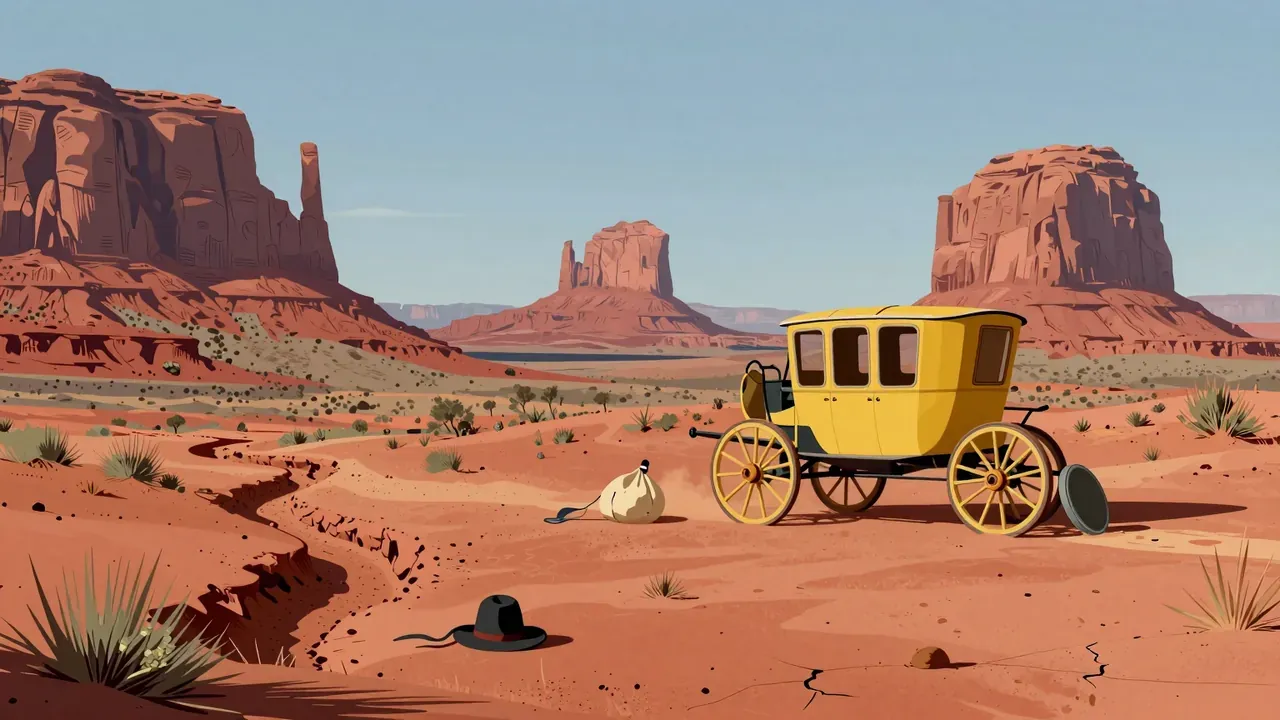
John Ford’s 1939 Stagecoach adapts Ernest Haycox’s short story into a tightly wound Western about nine strangers travelling by stagecoach from Arizona to New Mexico. Trapped together by geography and danger, their prejudices and pretensions erode under shared risk — culminating in childbirth, battle, and quiet acts of grace. Shot in Monument Valley, it launched John Wayne’s stardom and redefined the Western as a vehicle for moral and social inquiry. Its formal rigour remains unmatched; its omissions, particularly regarding Apache people, remain consequential.

13:00

The Shop Around the Corner

Ernst Lubitsch · 1940

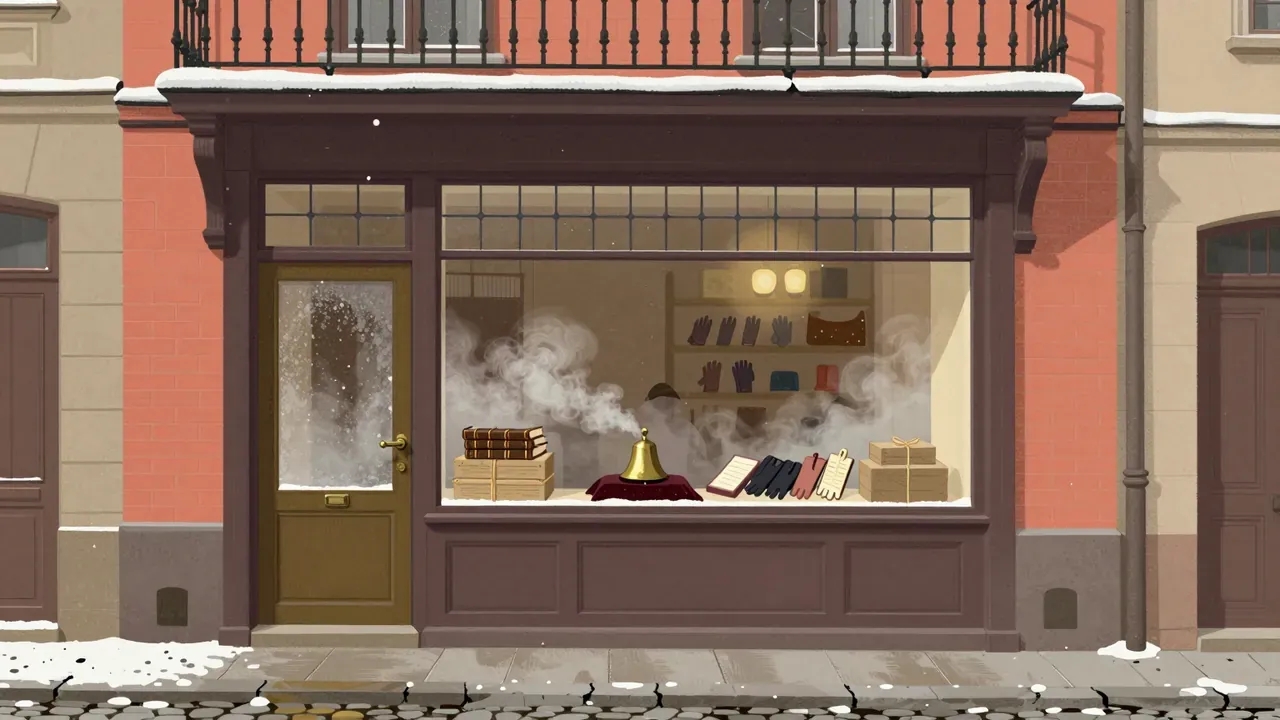
Ernst Lubitsch’s 1940 MGM film follows two Budapest shop clerks who feud at work while falling in love through anonymous letters. Shot in sequence with deliberate pacing, it trusts silence, gesture, and understated performance over plot mechanics. Though its reliance on coincidence weakens some turns, its fidelity to emotional realism and quiet dignity of ordinary life remains deeply affecting.

13:00

Rope

Alfred Hitchcock · 1948

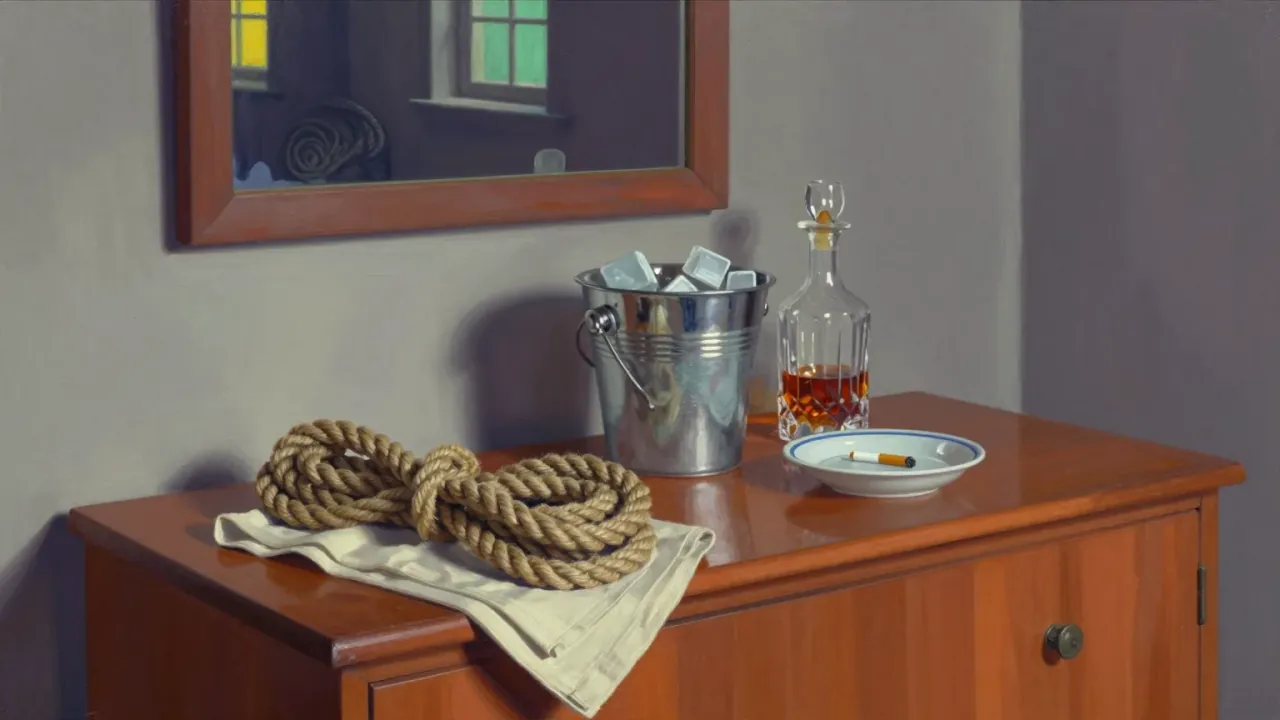
Alfred Hitchcock’s 1948 thriller Rope presents a murder and its aftermath in a single Manhattan apartment, shot to appear as four unbroken takes. Starring James Stewart, John Dall, and Farley Granger, it adapts Patrick Hamilton’s play about two men who kill to prove intellectual superiority — and then host a dinner party atop the corpse. Its formal rigour — movable sets, concealed cuts, shifting Technicolor light — makes it a landmark of studio-era experimentation, though its emotional reserve and constrained subtext remain divisive.

13:00

Wuthering Heights

William Wyler · 1939

William Wyler’s 1939 Wuthering Heights, produced by Samuel Goldwyn and shot by Gregg Toland, condenses Emily Brontë’s novel into a stark, atmospheric drama centred on Heathcliff and Cathy’s destructive bond. It omits the novel’s second generation and shifts the setting to the mid-19th century, prioritising visual mood over textual fidelity. Laurence Olivier and Merle Oberon anchor a tightly paced, formally assured adaptation whose power lies in its restraint, shadow, and silence — though its sentimental ending and flattened class dynamics remain contested.

13:00

Scarface

Brian De Palma · 1983

Brian De Palma's 1983 remake of Howard Hawks' original relocates the story to Miami's 1980 Mariel boatlift, with Oliver Stone's screenplay tracking a Cuban refugee's rise through the cocaine trade under Al Pacino at his most excessive. Giorgio Moroder's synthesizer score and a mansion-siege finale that a visiting Steven Spielberg helped shoot gave the film an afterlife in pop culture far larger than its mixed initial reviews suggested.