filmbriefs
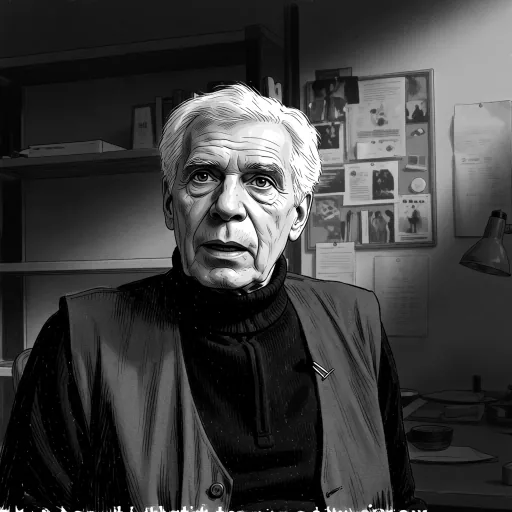
Editor · 1941–2011

Peter Przygodda

10
briefs
13:00
average
130 min
in total
On film.briefs10
13:00

Alice in the Cities

Wim Wenders · 1974

Wim Wenders’ 1974 road film follows a stalled writer and a nine-year-old girl as they search across Germany for her estranged grandmother. Shot in black-and-white 16 mm by Robby Müller, it favours duration over exposition, silence over speech, and observation over explanation. Its power lies in restraint: in the weight of a glance, the rhythm of a bus ride, the quiet persistence of mutual attention.
13:00

Kings of the Road

Wim Wenders · 1976

Wim Wenders’ 1976 Kings of the Road follows a projection-equipment repairman driving along West Germany’s side of the inner-German border, fixing decaying cinemas and sharing his cab with a man recovering from emotional collapse. Shot in black and white by Robby Müller, with sparse dialogue and long, observational takes, it is less a story than a sustained mood — one of quiet endurance, technical care, and landscape-as-character. Its 168-minute runtime tests attention but rewards it with granular detail and unsentimental humanity.

13:00

The American Friend

Wim Wenders · 1977

Wim Wenders’ 1977 adaptation of Patricia Highsmith’s Ripley’s Game stars Bruno Ganz as a terminally ill picture framer drawn into murder by Dennis Hopper’s enigmatic American, Tom Ripley. Shot in Hamburg and Paris by Robby Müller, with a sparse score by Jürgen Knieper, the film treats the thriller form as a vessel for existential portraiture — prioritising texture, hesitation, and linguistic nuance over plot mechanics. Its power lies in accumulation, not revelation.

13:00

The Lost Honour of Katharina Blum

Volker Schlöndorff, Margarethe von Trotta · 1975

Adapted from Heinrich Böll’s novel and co-directed by Volker Schlöndorff and Margarethe von Trotta, The Lost Honour of Katharina Blum follows a young woman’s rapid public undoing after a single night spent with a wanted man. Anchored by Angela Winkler’s tightly controlled performance and Jost Vacano’s unsentimental camerawork, the film dissects how tabloid logic, police presumption, and judicial passivity converge to erase a person without ever needing to convict her. It is a rigorously constructed, morally unblinking work — less concerned with guilt or innocence than with the speed and ease with which institutions revoke standing.

13:00

Wrong Move

Wim Wenders · 1975

Wrong Move (1975), directed by Wim Wenders and written with Peter Handke, follows Wilhelm Meister’s journey across West Germany as he attempts to become a writer. Shot by Robby Müller with stark, painterly compositions, the film reframes Goethe’s Bildungsroman as a critique of Romantic self-making. Its sparse dialogue, detached performances, and refusal of catharsis make it the most philosophically dense and emotionally austere entry in Wenders’ Road Movie trilogy.

13:00

Wings of Desire

Wim Wenders · 1987

Wings of Desire (1987) is a West German–French arthouse fantasy set in Cold War Berlin, following an angel who abandons immortality to experience human sensation. Shot in black-and-white for the angels’ perspective and colour for human life, it uses poetic narration, restrained performances, and location-based realism to explore silence, memory, and embodiment. Directed by Wim Wenders with cinematography by Henri Alekan and music by Jürgen Knieper, it won European Film Awards and critical acclaim, though its deliberate pace and abstract structure divide viewers.

13:00

Faraway, So Close!

Wim Wenders · 1993

Wim Wenders’ 1993 fantasy sequel Faraway, So Close! follows the angel Cassiel as he becomes human in reunified Berlin, navigating bureaucracy, addiction, and criminal enterprise. Shot by Jürgen Jürges and scored by Laurent Petitgand, it trades the poetic stillness of Wings of Desire for a grittier, more fragmented register — one that reflects the city’s uncertain new reality. Though it won the Grand Prix at Cannes, its loose structure and tonal shifts divided critics. It is a film of texture over trajectory, best approached as a sustained meditation on presence, not a story with stakes.

13:00

The State of Things

Wim Wenders · 1982

Wim Wenders’ 1982 Golden Lion winner follows a film crew stranded in Portugal when funding and film stock run out. Director Friedrich Munro travels to Los Angeles to find his missing producer, navigating a landscape of mobile homes, unpaid debts, and suspended creativity. Shot across Portugal and California with a mix of black-and-white and colour, and featuring cameos from Fuller, Corman and Kramer, it is a self-aware, deliberately unhurried meditation on the material conditions of filmmaking—and the quiet endurance required when nothing moves forward.

13:00

Until the End of the World

Wim Wenders · 1991

Wim Wenders’ 1991 epic follows Claire and Sam across continents as they evade bounty hunters and test a camera that lets the blind see recorded experiences. Shot across eleven countries with Robby Müller, it treats the road movie as philosophical drift — prioritising texture, duration, and the fragility of perception over plot or resolution.

13:00

Paris, Texas

Wim Wenders · 1984

A man wanders out of the Texas desert after four unexplained years, and Wim Wenders spends 147 patient minutes on what it costs him to reclaim a son and finally speak to the wife he left behind.