filmbriefs
Actor · Director · Screenwriter · Producer · 1937

Jack Nicholson

13
briefs
13:00
average
169 min
in total
On film.briefs13
13:00

A Safe Place

Henry Jaglom · 1971

Henry Jaglom’s 1971 drama follows Noah, a young woman drifting between present loneliness and childhood memory in New York City. Starring Tuesday Weld, Orson Welles, and Jack Nicholson, it uses fragmented editing, recurring motifs, and nostalgic music to evoke mental fragility without diagnosis. Culled from fifty hours of footage, it is a formally ambitious but divisive experiment in psychological portraiture — intimate, unresolved, and demanding of its viewer.
13:00

Broadcast News

James L. Brooks · 1987

Broadcast News (1987), written and directed by James L. Brooks, follows a Washington, D.C. television news producer torn between a brilliant but socially inept reporter and a telegenic but intellectually shallow anchor. Set against the shifting ethics of 1980s network news, it uses workplace realism, precise performances, and understated craft to explore ambition, integrity, and the quiet costs of professional excellence.

13:00

Drive, He Said

Jack Nicholson · 1971

Jack Nicholson’s 1971 directorial debut, adapted from Jeremy Larner’s novel, follows a disillusioned college basketball star navigating affairs, draft anxiety, campus unrest, and a volatile roommate. Shot on location at the University of Oregon, it features committed performances from William Tepper, Karen Black, and Bruce Dern, with cinematography by Bill Butler and a sparse score by David Shire. Though critically divided and commercially obscure, it remains a singular artefact of early-70s American countercinema—uneven, urgent, and uninterested in tidy answers.

13:00

Easy Rider

Dennis Hopper · 1969

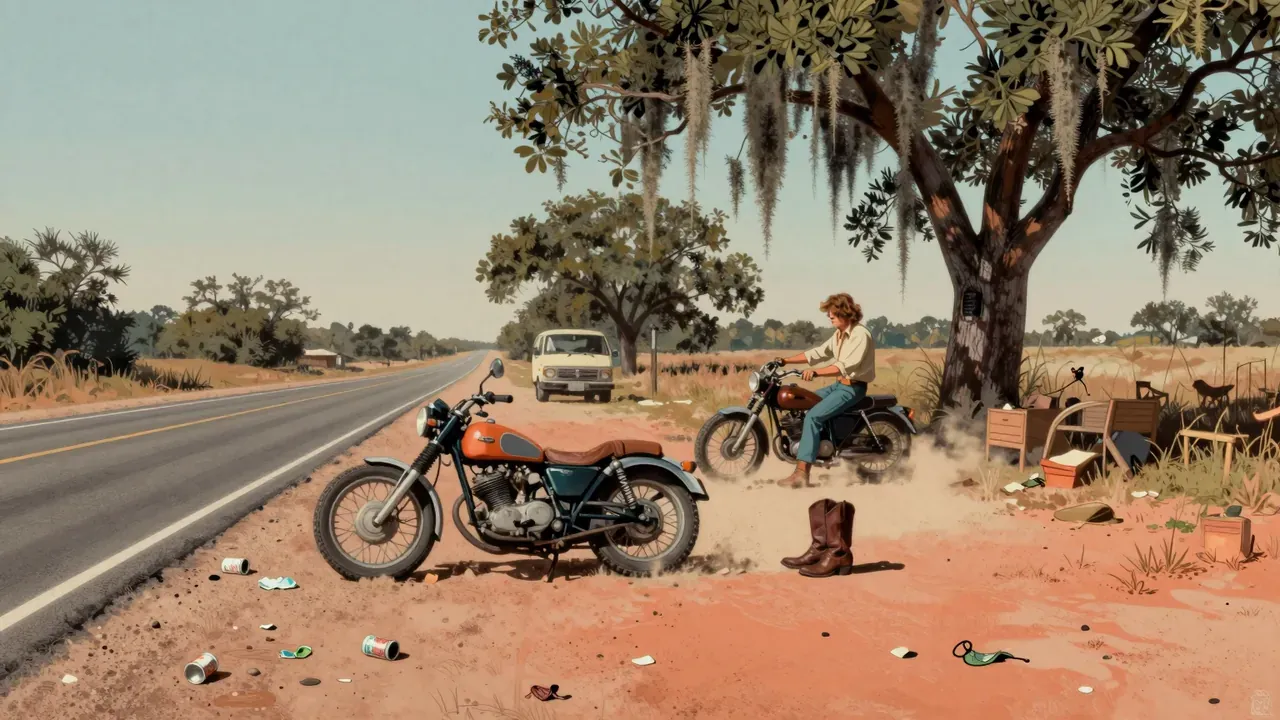
Easy Rider (1969), directed by Dennis Hopper and starring Peter Fonda and Jack Nicholson, follows two bikers travelling cross-country after a drug deal. Shot on location with natural light and improvised dialogue, it captures a fractured America through landscape, gesture, and omission. Its influence on independent cinema is well documented, but its endurance rests on formal discipline — not countercultural myth-making.

13:00

Five Easy Pieces

Bob Rafelson · 1970

Bob Rafelson’s 1970 drama follows Jack Nicholson as Bobby Dupea, a former piano prodigy working on an oil rig in California, who abandons his rootless life to visit his ailing, estranged father in Washington. Accompanied by his girlfriend Rayette (Karen Black), he re-enters the cultured, musically rigorous world he fled — confronting his siblings, his brother’s fiancée, and the unspoken reasons for his departure. László Kovács’ naturalistic cinematography and Carole Eastman and Rafelson’s sparse script anchor the film in behavioural realism, treating class, alienation, and self-erasure as physical facts rather than abstractions.

13:00

Head

Bob Rafelson · 1968

A 1968 satirical musical directed by Bob Rafelson and written by Jack Nicholson, Head uses The Monkees as raw material to dissect celebrity, media construction, and narrative coherence. With non-linear editing, meta-commentary, and deliberate tonal rupture, it rejects conventional storytelling in favour of structural critique — exposing how pop culture manufactures meaning by assembling fragments. Shot across Los Angeles, Palm Springs, Alaska, and The Bahamas, its craft serves its argument: every cut, lyric, and cameo functions as evidence in a case against authorship, authenticity, and audience expectation.

13:00

Ride in the Whirlwind

Monte Hellman · 1966

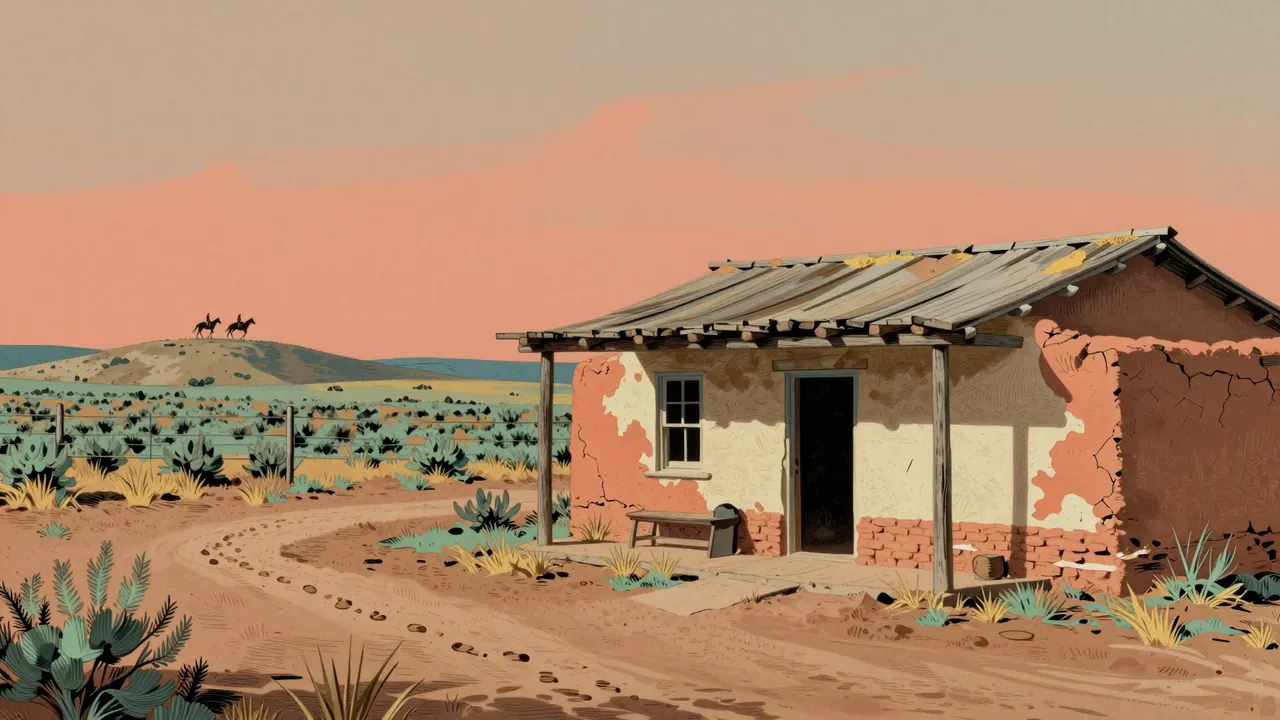
Made back-to-back with The Shooting in the Utah desert for under $75,000, Ride in the Whirlwind is Monte Hellman’s austere 1966 western, written and co-produced by Jack Nicholson. Two cowboys become fugitives after a case of mistaken identity, hunted by a vigilante posse across barren terrain. With minimal dialogue, sparse scoring and deliberate pacing, it strips the genre to its procedural bones — asking not who is guilty, but how guilt is assigned, enforced and endured.

13:00

The King of Marvin Gardens

Bob Rafelson · 1972

The King of Marvin Gardens (1972) follows depressive Philadelphia radio host David Staebler as he visits his charismatic, scheming brother Jason in a decaying Atlantic City. Against the backdrop of soon-to-be-demolished hotels, Jason pitches a Hawaiian casino venture while tensions mount among the four adults sharing his suite. László Kovács’ muted cinematography and Bob Rafelson’s unhurried direction treat delusion as routine, not crisis — making this a film less about plot than about the weight of unfulfilled promise, both personal and architectural.

13:00

The Shooting

Monte Hellman · 1966

Monte Hellman’s 1966 low-budget Western The Shooting follows two men and a mysterious woman across the Utah desert, trailed by a black-clad gunman. With no exposition, minimal music, and cinematography shot entirely in available light, it sustains a mood of unresolved tension. Written by Carole Eastman (as Adrien Joyce), it stars Warren Oates, Millie Perkins, Will Hutchins, and Jack Nicholson, and was produced by Hellman and Nicholson for $75,000. Though initially ignored by US distributors, it found arthouse success in Paris and remains a touchstone of minimalist, existential Western filmmaking.

13:00

Carnal Knowledge

Mike Nichols · 1971

Mike Nichols’ 1971 Carnal Knowledge follows two men across twenty-five years as their relationships with women deteriorate not through crisis but through repetition, habit, and emotional default. Adapted from Jules Feiffer’s play, it uses flat lighting, restrained performances, and unadorned editing to chart how language, routine and performance replace intimacy. Starring Jack Nicholson, Art Garfunkel, Ann-Margret and Candice Bergen, it remains a cold, structurally rigorous study of masculinity and desire — admired for its honesty, challenged for its austerity.

13:00

Chinatown

Roman Polanski · 1974

Chinatown sends Jack Nicholson's private investigator into a municipal water scandal modelled on the early-twentieth-century disputes that built Los Angeles, opposite Faye Dunaway and John Huston. Robert Towne's script won the film's only Oscar from eleven nominations, but the ending that gives the film its reputation was Polanski's, forced through over the writer's objections, and it is worth knowing which parts of the film are whose before deciding what the story is actually arguing.

13:00

One Flew Over the Cuckoo's Nest

Miloš Forman · 1975

Miloš Forman's adaptation of Ken Kesey's novel puts Jack Nicholson's disruptive new patient against Louise Fletcher's controlled head nurse inside the Oregon State Hospital, an operating psychiatric facility used as the actual set. Made for $3 million after a development history stretching back to 1962, it became one of only three films to sweep the top five Academy Awards, and it still plays as a study of institutional control rather than a simple underdog story.

13:00

The Shining

Stanley Kubrick · 1980

Stanley Kubrick's 1980 adaptation of Stephen King's novel follows a recovering alcoholic, his wife and their clairvoyant son through a winter at an isolated hotel, shot entirely on constructed sets in England on a $19 million budget, built around Jack Nicholson's escalating performance, John Alcott's Steadicam corridors and Wendy Carlos's electronic score.