Saved
Director · Screenwriter · 1926–2006

Shohei Imamura

5
briefs
13:00
average
65 min
in total
On film.briefs5
13:00

Pigs and Battleships

Shohei Imamura · 1961

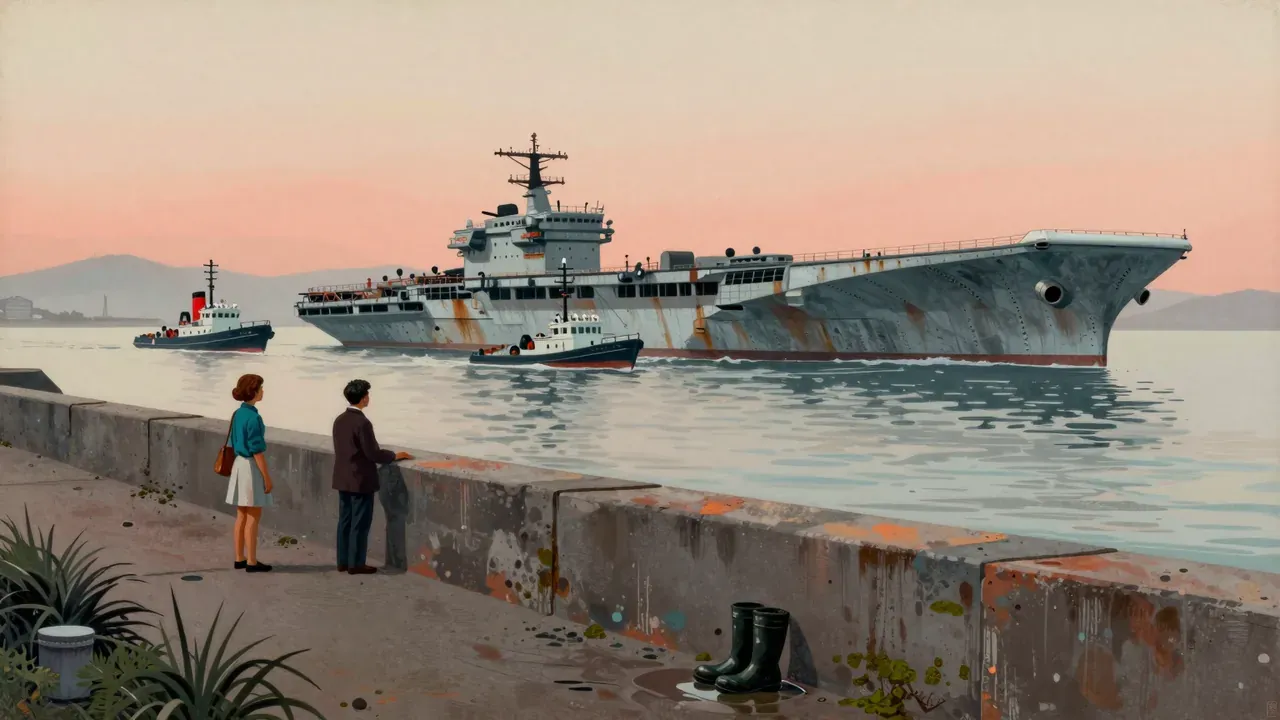
Shohei Imamura’s 1961 film Pigs and Battleships follows Kinta, a low-level yakuza operative in post-occupation Yokosuka, and Haruko, his girlfriend, as both are ground down by intersecting systems of crime, military presence, and poverty. Shot by Shinsaku Himeda and scored by Toshiro Mayuzumi, it uses satire not for laughter but for forensic clarity — tracking how pigs, corpses, yen, and bodies circulate under the same logic. Its climax releases hundreds of pigs into city streets during a gang confrontation, culminating in chaos that kills the syndicate but leaves Haruko to walk away, unaccompanied and unexplained, towards an uncertain future.
13:00

The Insect Woman

Shohei Imamura · 1963

Shohei Imamura’s 1963 drama follows Tome Matsuki from rural childhood to post-war Tokyo madam across thirty-two episodic chapters. Sachiko Hidari’s unsentimental performance, Shinsaku Himeda’s unadorned cinematography, and Toshiro Mayuzumi’s sparse score serve a vision of class and gender as material forces — not backdrops, but shaping pressures. Entered in Berlin, where Hidari won Best Actress, it remains a benchmark of socially grounded Japanese cinema.

13:00

The Pornographers

Shohei Imamura · 1966

Shohei Imamura’s 1966 film follows Subuyan Ogata, a small-time pornographer in post-war Osaka, living in a crowded house with his landlady Haru, her daughter Keiko and others. Based on Akiyuki Nosaka’s novel, it uses deadpan observation and unvarnished detail to explore desire, exploitation and ritual as inseparable parts of daily life. Shinsaku Himeda’s restrained cinematography and Shoichi Ozawa’s understated performance anchor a film that refuses moral framing in favour of anthropological clarity.

13:00

Unholy Desire

Shohei Imamura · 1964

Shohei Imamura’s 1964 drama follows Sadako, a woman excluded from her common-law husband’s family register, who endures rape, coercion, and bureaucratic erasure before filing a civil suit to claim legal recognition. Shot by Shinsaku Himeda and scored by Toshiro Mayuzumi, the film observes survival as daily practice — quiet, persistent, and rooted in material reality rather than moral arc.

13:00

Vengeance Is Mine

Shohei Imamura · 1979

Shohei Imamura’s 1979 film adapts Ryūzō Saki’s account of serial killer Akira Nishiguchi, renaming him Iwao Enokizu. Through fragmented flashbacks, it traces his crimes, deceptions and flight across post-war Japan, centring Ken Ogata’s restrained, physically precise performance. Shot by Shinsaku Himeda with unadorned naturalism and scored sparingly by Shinichiro Ikebe, the film avoids psychology and moral framing, instead mapping how Enokizu moves unchallenged through institutions — family, church, law, sex work — until his capture and execution. Its final image — ashes suspended mid-air — closes without resolution, leaving the viewer with the weight of unprocessed consequence.