filmbriefs
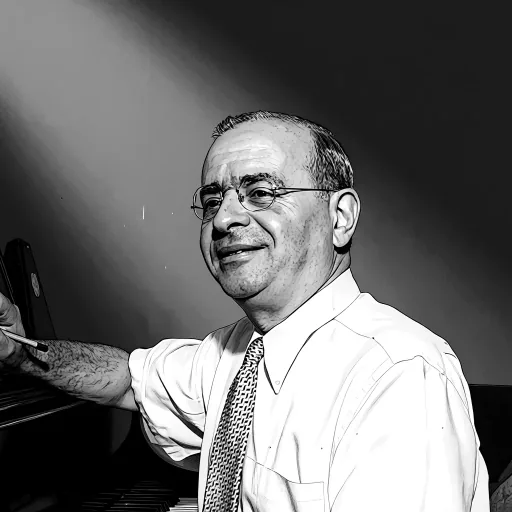
Composer · 1888–1971

Max Steiner

8
briefs
13:00
average
104 min
in total
On film.briefs8
13:00

Arsenic and Old Lace

Frank Capra · 1944

Frank Capra’s 1944 adaptation of Joseph Kesselring’s play is a tightly wound black comedy set over one Halloween day in a Brooklyn house where two elderly sisters poison lonely bachelors, their delusional nephew buries the bodies, and their theatre-critic nephew tries to contain the chaos. Starring Cary Grant, Josephine Hull and Raymond Massey, it prioritises rhythmic precision over emotional depth, using studio-era craft to sustain a high-wire act of escalating absurdity.
13:00

Mildred Pierce

Michael Curtiz · 1945

Mildred Pierce (1945) is a Warner Bros. drama directed by Michael Curtiz, starring Joan Crawford as a divorced mother who builds a restaurant empire only to be undone by her daughter’s ambition and cruelty. Adapted from James M. Cain’s novel but reshaped as a murder-tinged thriller to satisfy censorship rules, it foregrounds Crawford’s restrained, physically precise performance and Ernest Haller’s atmospheric cinematography. Though structurally conventional and morally rigid, its focus on labour, class, and maternal exhaustion gives it enduring resonance.

13:00

Now, Voyager

Irving Rapper · 1942

Now, Voyager (1942) follows Charlotte Vale’s transformation from a cowed Boston heiress into a composed, quietly autonomous woman, guided by therapy, a transatlantic cruise, and a chaste, enduring bond with a married architect. Directed by Irving Rapper and starring Bette Davis, it avoids melodrama in favour of psychological precision, using Sol Polito’s lighting, Max Steiner’s score, and Casey Robinson’s adaptation to sustain tension in restraint. Its power lies in what it withholds — resolution, romance, catharsis — and what it insists upon: dignity as practice, care as continuity, and healing as ongoing recalibration.

13:00

The Most Dangerous Game

Irving Pichel, Ernest B. Schoedsack · 1932

The Most Dangerous Game (1932) adapts Richard Connell’s short story with surgical fidelity: a shipwrecked hunter becomes prey to a Russian aristocrat who hunts humans for sport. Shot on the same jungle sets as King Kong, it uses tight pacing, Max Steiner’s leitmotif-driven score, and Leslie Banks’s chillingly controlled performance to sustain dread without gore or exposition. Its themes — predation, civilisation’s fragility, and the boredom of mastery — land through structure, not speech. At 63 minutes, it is lean, logical, and enduring.

13:00

The Scarlet Empress

Josef von Sternberg · 1934

Josef von Sternberg’s 1934 The Scarlet Empress stars Marlene Dietrich as Catherine the Great, but discards historical fidelity for baroque expressionism — grotesque sculpture, candlelit gloom, and rhythmic, ritualistic pacing. Bert Glennon’s cinematography and Max Steiner’s score reinforce a vision of imperial power as oppressive theatre. Though dramatically uneven and narratively elliptical, it remains a landmark of studio-era stylistic audacity, prioritising atmosphere over exposition and iconography over psychology.

13:00

Casablanca

Michael Curtiz · 1942

A 1942 Warner Bros. romantic drama set in Vichy-controlled Casablanca, where American expatriate Rick Blaine must choose between rekindling a wartime romance with Ilsa Lund and helping her husband, resistance leader Victor Laszlo, escape to continue fighting the Nazis. Directed by Michael Curtiz, written by Julius and Philip Epstein, Howard Koch and Casey Robinson, and starring Humphrey Bogart and Ingrid Bergman, it is a tightly constructed studio picture whose enduring power lies in its moral economy, disciplined craft and refusal to separate personal longing from political consequence.

13:00

The Treasure of the Sierra Madre

John Huston · 1948

John Huston’s 1948 adaptation of B. Traven’s novel follows two American drifters and an ageing prospector searching for gold in the Mexican wilderness. As the find is made, trust fractures, language fails, and morality simplifies to survival. With restrained cinematography by Ted McCord, sparse scoring by Max Steiner, and performances anchored by Humphrey Bogart and Walter Huston, the film traces the slow, unsentimental collapse of shared reality under pressure. Shot on location in Mexico and California, it remains a benchmark of psychological realism — austere, exacting, and unyielding.

13:00

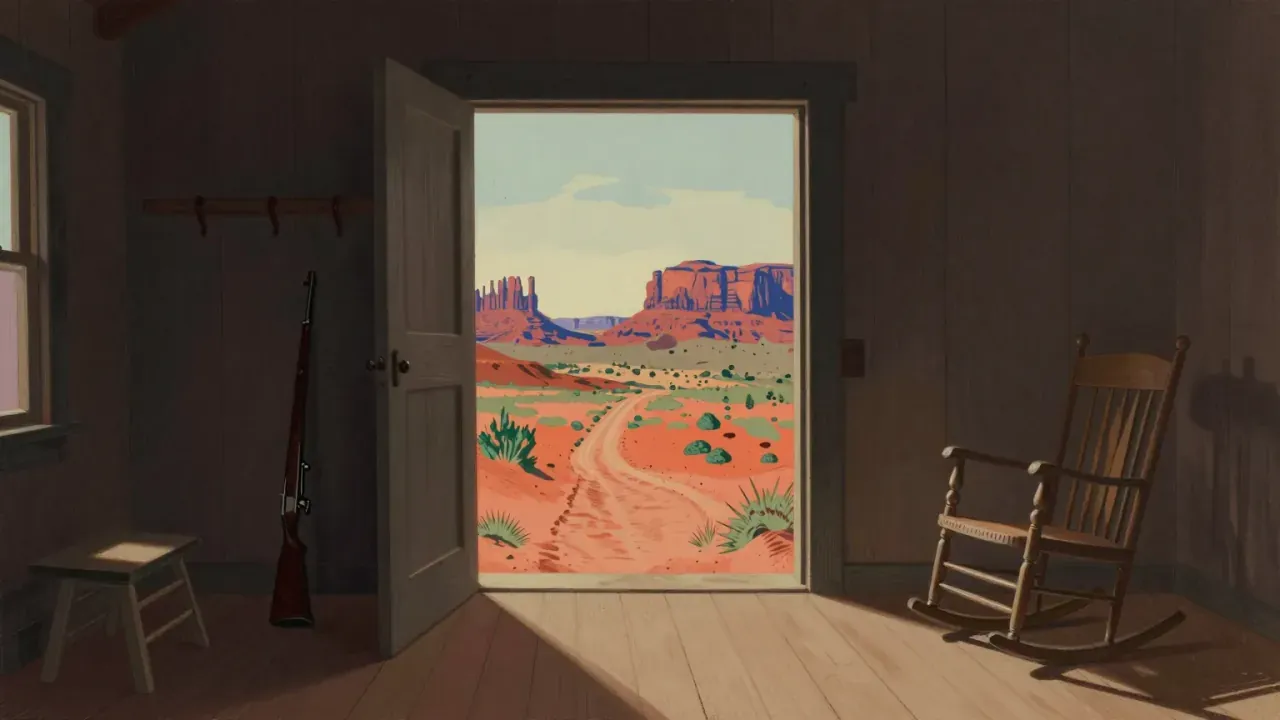
The Searchers

John Ford · 1956

John Ford's 1956 western follows Ethan Edwards, a Confederate veteran played by John Wayne, across years of searching Monument Valley for a niece abducted in a Comanche raid, adapted from Alan Le May's novel and shot in VistaVision and Technicolor, its reputation built on Winton Hoch's photography and an ending that leaves its hero permanently outside the door.