Saved
Actor · Screenwriter · Director · 1942

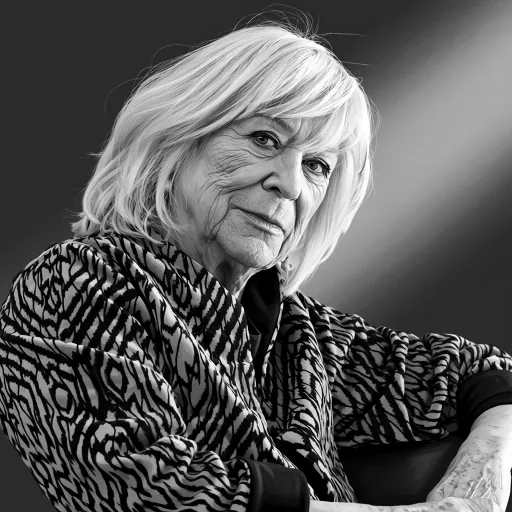
Margarethe von Trotta

6
briefs
13:00
average
78 min
in total
On film.briefs6
13:00

Baal

Volker Schlöndorff · 1970

Volker Schlöndorff’s 1970 adaptation of Brecht’s Baal transposes the 1923 play into late-1960s West Germany, starring Rainer Werner Fassbinder in the title role. Shot in vivid, expressionistic colour by Dietrich Lohmann and scored sparsely by Klaus Doldinger, it refuses psychological exposition or moral framing. Instead, it holds Baal — a self-destructive, charismatic, violently entitled poet — in unrelenting focus, exposing the social machinery that enables his ‘genius’. Long suppressed and recently restored, it remains a rigorous, uncomfortable, and formally exacting work.

13:00

Beware of a Holy Whore

Rainer Werner Fassbinder · 1971

Rainer Werner Fassbinder’s 1971 drama Beware of a Holy Whore stages the slow disintegration of a film crew stranded in a Spanish hotel, awaiting production that never begins in earnest. Shot by Michael Ballhaus and edited by Fassbinder and Thea Eymèsz, it uses repetition, confinement and unresolved tension to explore self-deception, dependency and the violence of creative collaboration.

13:00

Coup de Grâce

Volker Schlöndorff · 1976

Volker Schlöndorff’s 1976 Coup de Grâce, adapted from Marguerite Yourcenar’s novel and co-written by Margarethe von Trotta, relocates the story from Erich von Lhomond’s first-person account to Sophie von Reval’s silent, searching presence. Set in a Latvian chateau during the 1919 Freikorps campaign, it uses black-and-white cinematography, elliptical editing and muted performances to examine desire, trauma and ideological vacancy amid collapsing empires. Not a conventional war film, it holds violence at a distance and finds its force in omission, restraint and unresolved tension.

13:00

Gods of the Plague

Rainer Werner Fassbinder, Michael Fengler · 1969

Gods of the Plague is Rainer Werner Fassbinder’s 1970 black-and-white drama, co-directed with Michael Fengler and shot in Munich and Dingolfing. It follows ex-convict Franz Walsch as he re-enters Munich’s criminal underworld, navigating ambiguous relationships with two women and a friend implicated in his brother’s death. Stylised through static compositions, minimal dialogue, and high-contrast monochrome cinematography by Dietrich Lohmann, the film treats noir not as genre but as structure to be exposed and exhausted. Its themes centre on mediated identity, erotic ambiguity, and the futility of narrative resolution. Though critically respected for its formal control and ensemble discipline, its austerity makes it demanding — rewarding for those attuned to Fassbinder’s early methods, less so for viewers seeking emotional or narrative engagement.

13:00

The American Soldier

Rainer Werner Fassbinder · 1970

Rainer Werner Fassbinder’s 1970 drama The American Soldier follows Ricky, a German-American Vietnam veteran turned contract killer working for renegade Munich police. Shot in stark, frontal compositions by Dietrich Lohmann and edited with metronomic restraint by Thea Eymèsz, the film strips away psychology and suspense to expose the administrative logic of violence. Its themes — complicity, procedural detachment, language as control — are enacted, not explained. A demanding, formally rigorous work from Fassbinder’s early arthouse period.

13:00

The Lost Honour of Katharina Blum

Volker Schlöndorff, Margarethe von Trotta · 1975

Adapted from Heinrich Böll’s novel and co-directed by Volker Schlöndorff and Margarethe von Trotta, The Lost Honour of Katharina Blum follows a young woman’s rapid public undoing after a single night spent with a wanted man. Anchored by Angela Winkler’s tightly controlled performance and Jost Vacano’s unsentimental camerawork, the film dissects how tabloid logic, police presumption, and judicial passivity converge to erase a person without ever needing to convict her. It is a rigorously constructed, morally unblinking work — less concerned with guilt or innocence than with the speed and ease with which institutions revoke standing.