filmbriefs
Director · Screenwriter

Julien Duvivier

6
briefs
13:00
average
78 min
in total
On film.briefs6
13:00

David Golder

Julien Duvivier · 1930

Julien Duvivier’s 1930 adaptation of Irène Némirovsky’s David Golder stars Harry Baur as a dying Jewish financier whose wealth cannot insulate him from betrayal or bodily failure. Shot by Georges Périnal with deliberate claustrophobia and scored sparingly by Walter Goehr, the film sustains moral and psychological pressure through performance, framing, and silence — not spectacle or sentiment. Its rigour is uncompromising: no catharsis, no exposition, no relief. A landmark of early French sound cinema and a precise study of transactional identity.
13:00

La Tête d'un homme

Julien Duvivier · 1933

Julien Duvivier’s 1933 adaptation of Simenon’s A Battle of Nerves follows Inspector Maigret (Harry Baur) as he untangles a murder set in motion by a gambler’s careless remark, a desperate burglar’s stumble, and a dying émigré’s bitter calculation. Shot in subdued tones by Thirard and Pierre, with a sparse score by Belasco and editing by Poncin, it trades thrills for psychological weight — building tension through silence, spatial constraint, and moral ambiguity. Its power lies in what it withholds: no grand confessions, no triumphant deductions, only the quiet, cumulative force of cause and effect in interwar Paris.

13:00

Panique

Julien Duvivier · 1946

Julien Duvivier’s 1946 Panique adapts Simenon to trace how a small French town turns a reclusive man into a scapegoat for a murder he did not commit. With Michel Simon as the doomed Monsieur Hire and Viviane Romance as the compromised Alice, the film uses precise staging, restrained performances, and a suffocatingly ordinary setting to dramatise the mechanics of collective suspicion—less a thriller than a forensic study of moral contagion in the immediate postwar years.

13:00

Pépé le Moko

Julien Duvivier · 1937

Julien Duvivier’s 1937 French crime film follows Jean Gabin as Pépé le Moko, a celebrated thief holed up in Algiers’ Casbah, where he rules a labyrinthine enclave but cannot step beyond it. When a glamorous Parisian visitor arrives, his carefully maintained stasis unravels. Built on a studio set and defined by its moody, shadow-drenched cinematography, the film is a landmark of poetic realism — less a thriller than a slow, fatal meditation on exile, desire and the illusion of control.

13:00

The Red Head

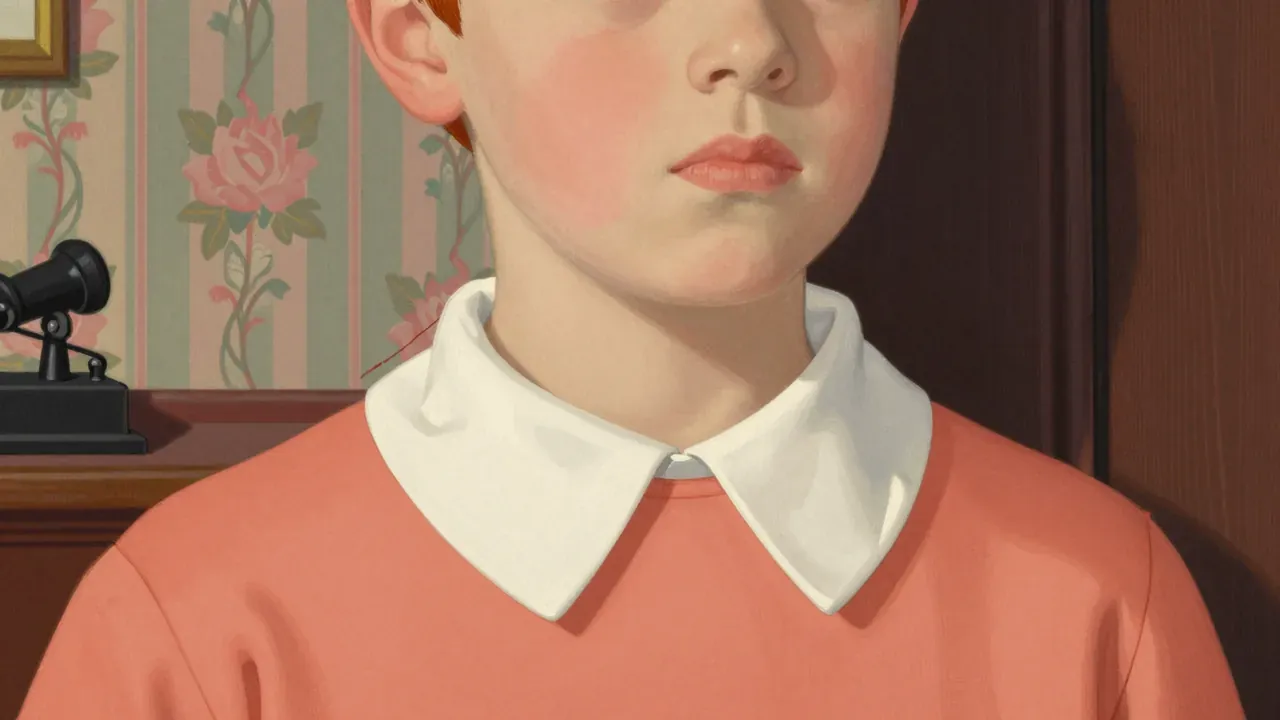
Julien Duvivier · 1932

Julien Duvivier’s 1932 adaptation of Jules Renard’s Poil de carotte is a restrained, psychologically precise portrait of a red-haired boy navigating emotional neglect in a rigid bourgeois household. Robert Lynen’s performance anchors the film, supported by Harry Baur and Catherine Fonteney as his emotionally distant parents. Maurice Monniot’s cinematography and Alexandre Tansman’s sparse score serve the film’s commitment to understatement. Though occasionally undermined by didactic framing and technical limitations of early sound, it remains a masterclass in showing rather than telling — and in treating childhood as lived duration, not narrative arc.

13:00

Un carnet de bal

Julien Duvivier · 1937

Un carnet de bal (1937), directed by Julien Duvivier, follows Christine, a recently widowed woman who revisits the men who signed her debut ball dance card twenty years earlier. Through a series of vignettes, the film traces how youthful promise dissolved into varied, often diminished, adult lives—without judgement or hierarchy. Shot in France with Philippe Agostini’s restrained cinematography and Maurice Jaubert’s subtle score, it prioritises observation over exposition, stillness over motion, and moral neutrality over moralising. Its power lies in cumulative effect, not plot, and its endurance rests on its refusal to simplify time, regret, or human consequence.