filmbriefs
Actor · 1898–1984

Bess Flowers

4
briefs
13:00
average
52 min
in total
On film.briefs4
13:00

One Hour with You

Ernst Lubitsch, George Cukor · 1932

One Hour with You (1932) is a Paramount romantic musical comedy directed by Ernst Lubitsch with George Cukor, starring Maurice Chevalier and Jeanette MacDonald. Adapted from Lothar Schmidt’s play and Lubitsch’s own 1924 film, it follows a Parisian doctor whose marital calm is gently disrupted by his wife’s flirtatious friend. With Oscar Straus’s score and Samson Raphaelson’s script, it prioritises wit, timing, and surface elegance over psychological depth — a polished, pre-Code exercise in controlled charm.

13:00

The Awful Truth

Leo McCarey · 1937

Leo McCarey’s 1937 screwball comedy stars Cary Grant and Irene Dunne as a divorcing couple whose competitive courtship reveals they still love each other. Built on Viña Delmar and Sidney Buchman’s script, it replaces moralising with behavioural precision, using dog custody hearings, nightclub sabotage and society-party sabotage to expose the gap between social performance and private feeling. Joseph Walker’s cinematography and Al Clark’s editing sustain its tight, unhurried rhythm. Though some supporting elements feel thin and its class framework dated, its central performances and structural clarity remain benchmarks of studio-era comedy.

13:00

Rear Window

Alfred Hitchcock · 1954

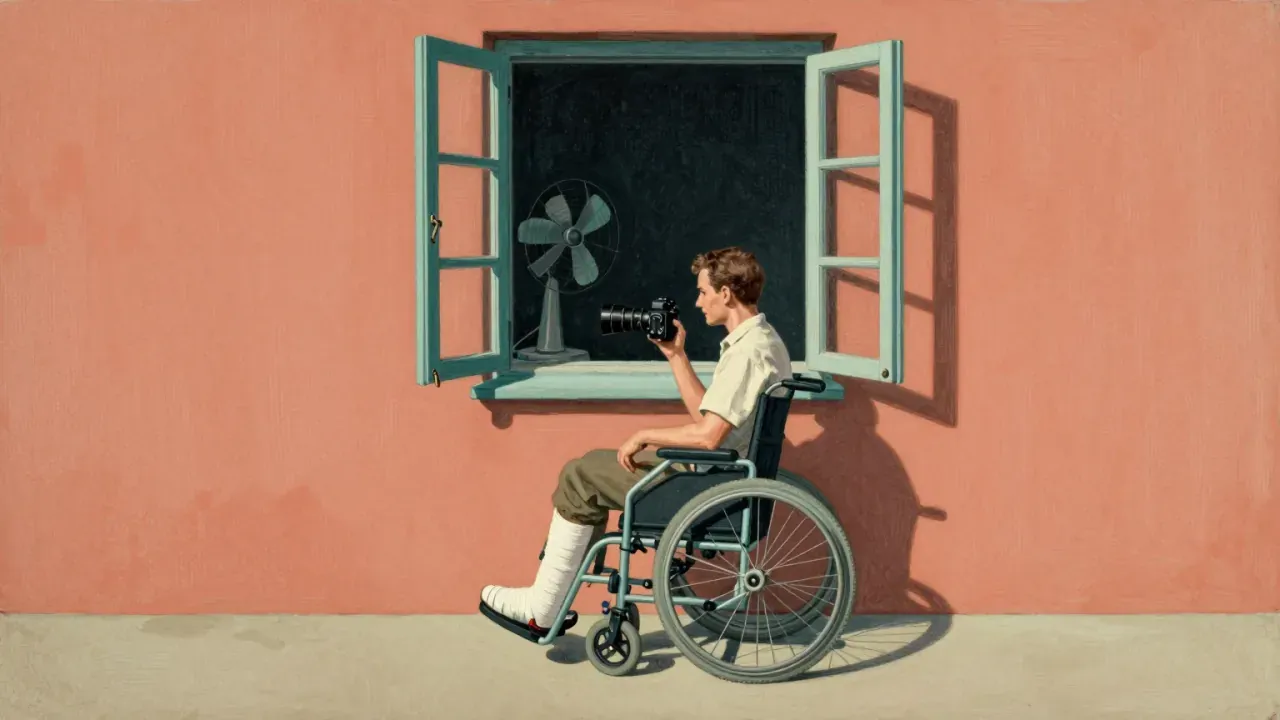
Confined almost entirely to one apartment and the courtyard it overlooks, Rear Window turns a photographer's boredom into a murder investigation conducted through binoculars. Built on a single elaborate Paramount set, it is Hitchcock at his most tightly engineered, with James Stewart watching and Grace Kelly eventually doing the one thing he cannot: crossing the courtyard himself.

13:00

Vertigo

Alfred Hitchcock · 1958

Alfred Hitchcock's 1958 film follows Scottie Ferguson, a retired police detective with a crippling fear of heights, hired to trail a friend's wife who believes she is possessed by a dead ancestor. What begins as surveillance turns into obsession, and after a death he could not prevent, Scottie tries to remake a second woman into the image of the first. Shot by Robert Burks with a spiralling title-sequence effect and scored by Bernard Herrmann, it earned back roughly three times its $2.5 million budget on release and has since climbed steadily in critical standing, unseating Citizen Kane at the top of one long-running critics' poll.